Stag Air Park, Burgaw NC
A community-focused airpark dedicated to the advancement of sport aviation. As the proud home of EAA 297 and Legend Aero Holdings, Stag Air Park serves as a hub for innovation, education, and experimental flight operations in Southern Eastern North Carolina.
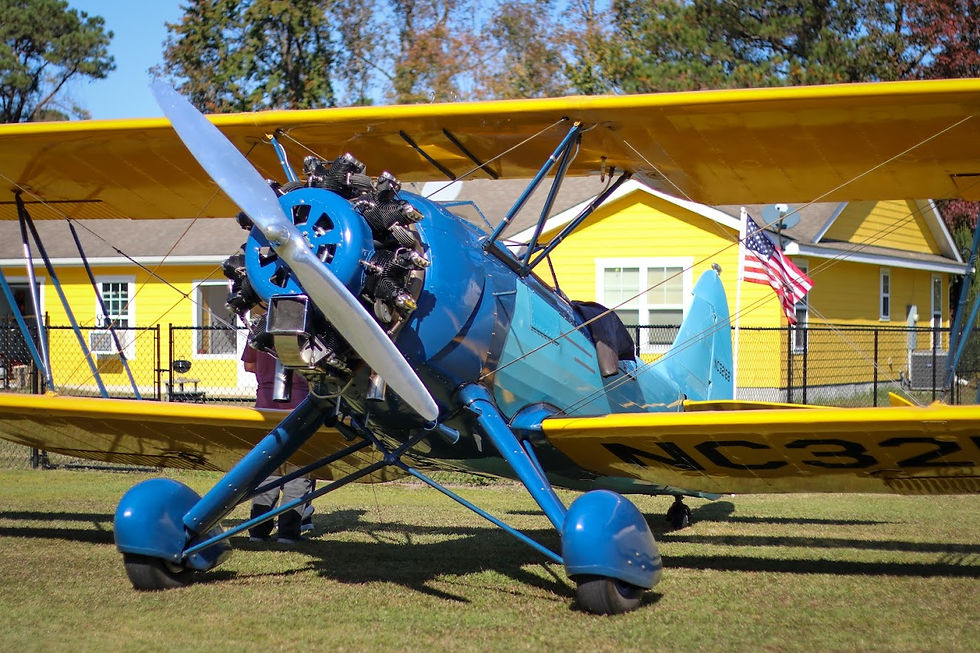
Premier Facilities

Turf Runway
Our well-maintained turf runway provides seamless access for GA operations, with approach paths typical of backcountry airports. A unique experience for all aviators.

Modern Hangars
Secure hangar facilities with high-speed Wi-Fi designed for aircraft storage and meticulous maintenance, accommodating diverse experimental and classic general aviation models.

Community Spaces
Enjoy community amenities including a pilot lounge with Wi-Fi, briefing areas, kitchen and bathrooms, and dedicated spaces for education, training, and GA collaboration.

Our Presence at Stag Air Park
Legend Aero Holdings and EAA 297 maintains a committed presence at Stag Air Park, serving as a hub for sport aviation excellence. We utilize the facility’s unique atmosphere for specialized education, pilot training, and experimental general aviation operations. We provide a foundation for excellence that serves both the local community and the broader aviation industry.
Visiting Stag Air Park
Located in Burgaw, NC, Stag Air Park (7NC1) is a private residential airpark and the operational hub for EAA 297 & Legend Aero Holdings.
We welcome visitors.
Stag Air Park holds numerous events each year, including Fly-ins & Car Shows, Young Eagle Rallies and other community events.
Airfield Procedures & Runway Data
-
RUNWAY DESCRIPTION: Location: N34°31.68' / W77°51.02’. Runway 11/29 measures 4,000 feet with a good turf surface 150 foot wide; field elevation is 23 feet MSL
-
RUNWAY LAYOUT: The runway crown/centerline is approximately 75 feet from the adjacent tree line. All takeoffs and landings should be conducted near the crown of the runway
-
TAXIWAY LAYOUT: The parallel taxiway lies between the runway and nearby residences/buildings
-
RUNWAY CLOSURE: When necessary, closed runway ends will be marked with large “X” indicators
-
HELICOPTER LANDING ZONE (LZ): Located adjacent to the southeastern end of the main hangar unless refueling operations are underway
-
DRAINAGE: The taxiway is positioned lower than both the runway crown and adjacent residential backyards.
-
Heavy rainfall may result in puddling and soft ground, particularly at the approach end of Runway 11.
-
-
WEATHER INFORMATION: Current weather conditions are available at ambientweather.net by searching "Stag Air Park."
-
FUEL: 100LL fuel is available
TRAFFIC PATTERN ALTITUDES:
-
Airplanes: 1,020 feet MSL / 1,000 feet AGL
-
Helicopters/Gyroplanes/Ultralights: 520 feet MSL / 500 feet AGL
OBSTACLES:
-
Runway 11: Approach end is bordered by tall trees.
-
Runway 29: The height of the tall trees located one-quarter mile along the extended centerline exceed the normal glide path height. Power lines next to road are buried
-
Runway 29: Be careful of the potential truck and auto traffic along the road
-
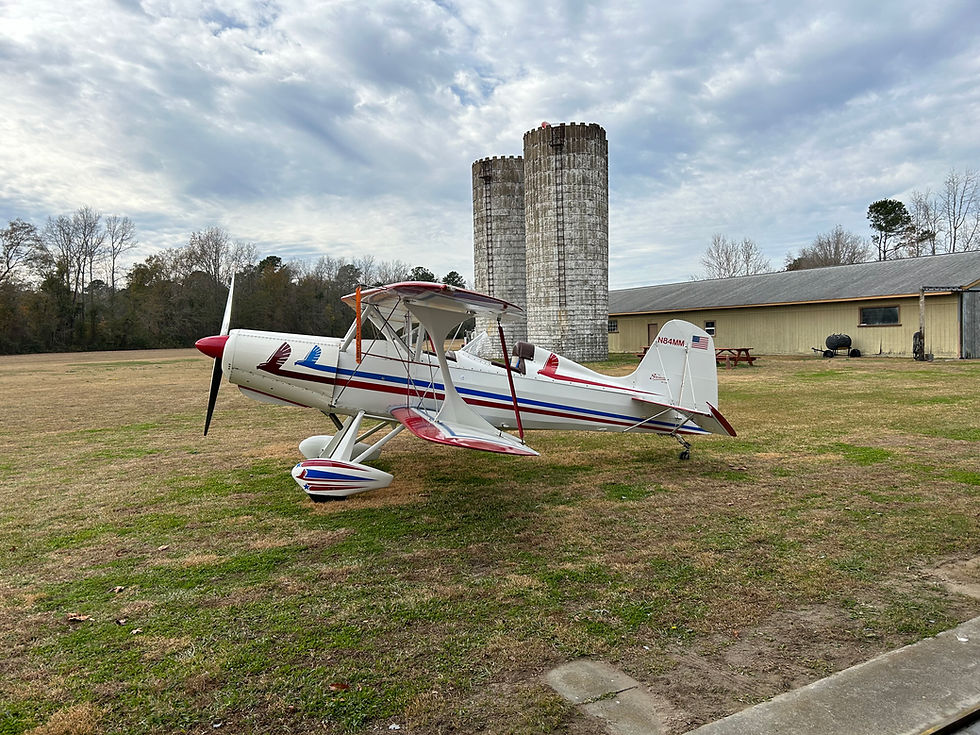
Airfield: Two tall silos are situated on the northern side of the runway near hangars. A 50-foot windsock tower stands on the north side of the taxiway.
-
Airfield: Tall trees border the southern edge of the runway.
-
Northern cross winds may result in turbulence near runway surface in the region of the houses.
TRAFFIC PATTERN PROCEDURES: Standard patterns per AIM and AC 90-66B apply unless otherwise noted. Use left-hand traffic patterns for both runways.
-
During calm wind conditions, use Runway 29 for both departures and arrivals.
-
Operating runway selection is determined by wind direction as indicated by windsocks.
-
Avoid low-level overflight of homes, buildings, or silos.
-
Activate landing lights and strobes.
-
Remain vigilant for aircraft operating without radios.
-
Helicopters approaching the LZ or other non-runway sites must avoid fixed-wing traffic flow.
-
Helicopters, gyroplanes, and ultralights utilizing the runway should adhere to standard traffic pattern procedures when possible
-
Helicopter operations must avoid low level flight over parked aircraft, vehicles, and personnel.
ARRIVAL PROCEDURES: Determine active runway by monitoring CTAF or conducting an overflight at no less than 1,520 feet MSL.
-
When possible, utilize the same runway as established pattern traffic
-
Standard entry is a 45-degree angle abeam the midpoint of the landing runway.
-
Alternate approaches (straight-in, overhead, low approach) are permitted if clearly broadcast on CTAF, well-coordinated, and non-disruptive to existing traffic.
-
Avoid entering the pattern while descending; maintain pattern altitude until abeam the departure end. Initiate base leg turn at a 45-degree offset from the approach end; final approach should be established no less than one-quarter mile from the runway threshold.
DEPARTURE PROCEDURES: Departing aircraft are to proceed straight ahead beyond the runway departure end, then continue straight out or execute a 45-degree left turn after reaching 1,020 feet MSL.
PATTERN OPERATIONS: Aircraft taking off or performing a go-around must continue straight ahead until passing the runway departure end and climbing above 720 feet MSL.
COMMUNICATIONS: Utilize “STAG TRAFFIC” CTAF frequency 122.9 MHz VHF.
-
Departing and Arriving Stag Air Park (opens in new tab)
